In many contexts, lighting is something people simply expect to be there. Yet what allows us to see every day is the result of a complex system that affects not only visibility, but also comfort, spatial perception, and the overall quality of experience.
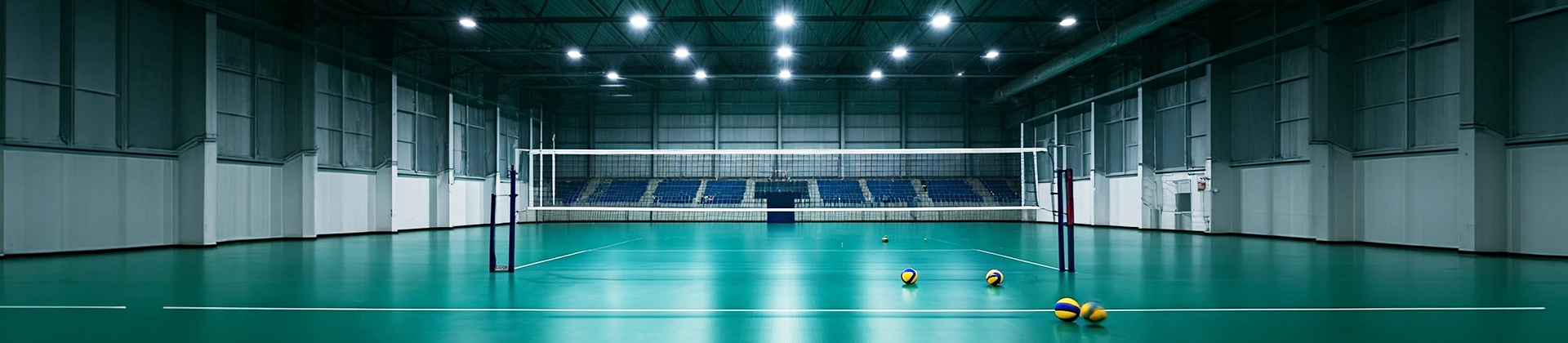
This is even more evident in sports facility lighting, where light is not just a technical requirement, but a key factor in performance, safety, and the usability of spaces.
We spoke with Antonio Zanetti — Specification Manager and Brand Ambassador at GDS Lighting, with over 40 years of experience in the industry — to explore how LED technology has transformed sports lighting design and what challenges define projects today, particularly in lighting for small sports facilities.
Lighting is often perceived like air or heat — we tend to notice it only when it is missing or not working as it should. In reality, it is one of the fundamental elements for life and, in our context, for activating one of our most important senses: sight.
When it comes to sports facility lighting, however, it is not just about enabling people to see. Light also affects performance and comfort. A system may be technically compliant, yet still perceived as uncomfortable or visually tiring.
This means that light operates on both a functional and an emotional level. For this reason, it should not be considered a trivial element: it has a direct impact on the quality of experience, both for those who practice sport and those who watch it.
The introduction of LED technology marked a real turning point. The main difference lies in the ability to control light with much greater precision.
LED is an extremely compact, almost point-like source, which makes it possible to design much more effective optics. While in the past available solutions were limited, today designers can work with a much wider range of optics tailored to specific applications, directing light exactly where it is needed.
This is combined with a significant improvement in energy efficiency. Compared to previous technologies, typically around 100–120 lm/W, LED solutions now achieve much higher performance levels.
Another key development has been the integration of electronics into lighting systems. LEDs make it possible to regulate light output, adjust colour temperature, manage switching, and enable remote control, as well as create predefined lighting scenarios.
These capabilities have redefined how lighting systems are designed and used.
Large sports facilities benefit from greater availability of resources, allowing for more advanced levels of design and control. Structural conditions are also often optimised from the outset: mounting heights, positioning and layout are designed to ensure high performance.
In smaller facilities, however, the context is very different. These are often existing installations, with significant constraints — such as lower pole heights or non-ideal positioning — as well as more limited budgets.
This does not mean that requirements are lower, but that they must be addressed differently. Solutions need to be simpler, yet still effective, making full use of LED characteristics — for example, through asymmetric optics that direct light while minimising upward dispersion.
The real challenge is therefore adapting the technology to the context, rather than simply applying solutions developed for large-scale installations.
The starting point is always understanding the client’s actual needs, which are often not fully defined. Our role is to support the client in this process, helping to clarify what is really required.
Only from this analysis is it possible to develop a solution that is truly effective, avoiding oversized or misaligned systems.
This approach makes it possible to develop targeted technological solutions, achieving the best balance between performance and cost, using systems specifically designed for that type of application.
The result is installations that are simple to manage, yet fully adequate from a lighting design perspective.
The primary benefits relate first and foremost to the overall quality of lighting.
An upgrade improves visibility, enhances visual comfort, and allows intervention on aspects such as colour temperature, helping to create a more suitable atmosphere for sports activities.
In addition, energy efficiency is a key factor, also thanks to the possibility of regulating and managing the system more effectively. However, especially in smaller facilities, return on investment is not always immediate, as operating hours may be limited compared to other applications, such as street lighting.
Using energy only when and to the extent required is fundamental to efficiency. LED technology, combined with control devices, makes it possible to adjust lighting levels easily and effectively, enabling partial operation of the system according to predefined scenarios.
Another important benefit is reduced maintenance. LED solutions offer longer lifespans, while traditional technologies are becoming increasingly complex and costly to manage, also due to the growing difficulty in sourcing lamps.
In recent years, the way technology is used in lighting has changed significantly. In sports facilities, however, the difference lies not only in the evolution of tools, but in the ability to apply them correctly, based on the actual needs of the installation.
This is the principle behind the approach of GDS Lighting, which supports clients in defining the most suitable solutions, with the aim of combining performance, simplicity, and sustainability.
The result is lighting systems that are simple to manage, yet fully compliant from a lighting design perspective, where technology is applied in a targeted and conscious way.
Antonio Zanetti, Specification Manager and Brand Ambassador at GDS Lighting.