Rising energy costs and the need to remain competitive are prompting an increasing number of companies to invest in energy efficiency projects.
Reducing energy consumption has therefore become one of the most effective ways to contain operating costs and improve the performance of industrial facilities.
Among the most widely adopted solutions are LED relamping projects, the integration of renewable energy sources and the use of technologies that support more efficient energy management.
We spoke with Americo Gregoris, Business Developer at GDS Lighting, who shares his insights into the factors currently driving investment in energy efficiency and the evolution of the strategies adopted by industrial companies.
I would say that the primary driver is the behaviour of electricity prices, which over the last four years have offered little respite.
Since 2022, electricity prices have experienced significant increases, reaching record levels. Although procurement costs declined during 2023, they remained approximately twice as high as in 2021. During the second half of 2024, prices began rising again, reaching around €120–130/MWh and peaking at approximately €150/MWh in 2025.
What this means is that, since 2021, electricity costs have remained at levels that are highly challenging for Italian companies, particularly when competing with businesses in countries that benefit from more forward-looking energy policies and greater energy independence, for example through nuclear power generation, which allows them to secure electricity at considerably lower costs.
Energy is also a cost that businesses cannot directly control and are therefore forced to absorb.
Today, it is clear that there are only two effective ways to contain energy procurement costs: investing in measures that reduce electricity and gas consumption, both in support services and production processes, and increasing the use of renewable energy sources.
First and foremost, it is important to carry out a preliminary assessment, commonly referred to as an energy audit, of a company’s overall consumption profile. This should take into account not only energy carriers such as electricity and gas, but also other utilities, including water, as decisions relating to energy efficiency can be misleading if all relevant variables are not considered.
It is always advisable to establish a list of potential interventions and prioritise them based on the incentives available, the expected payback period and the sustainability objectives the company has set for itself.
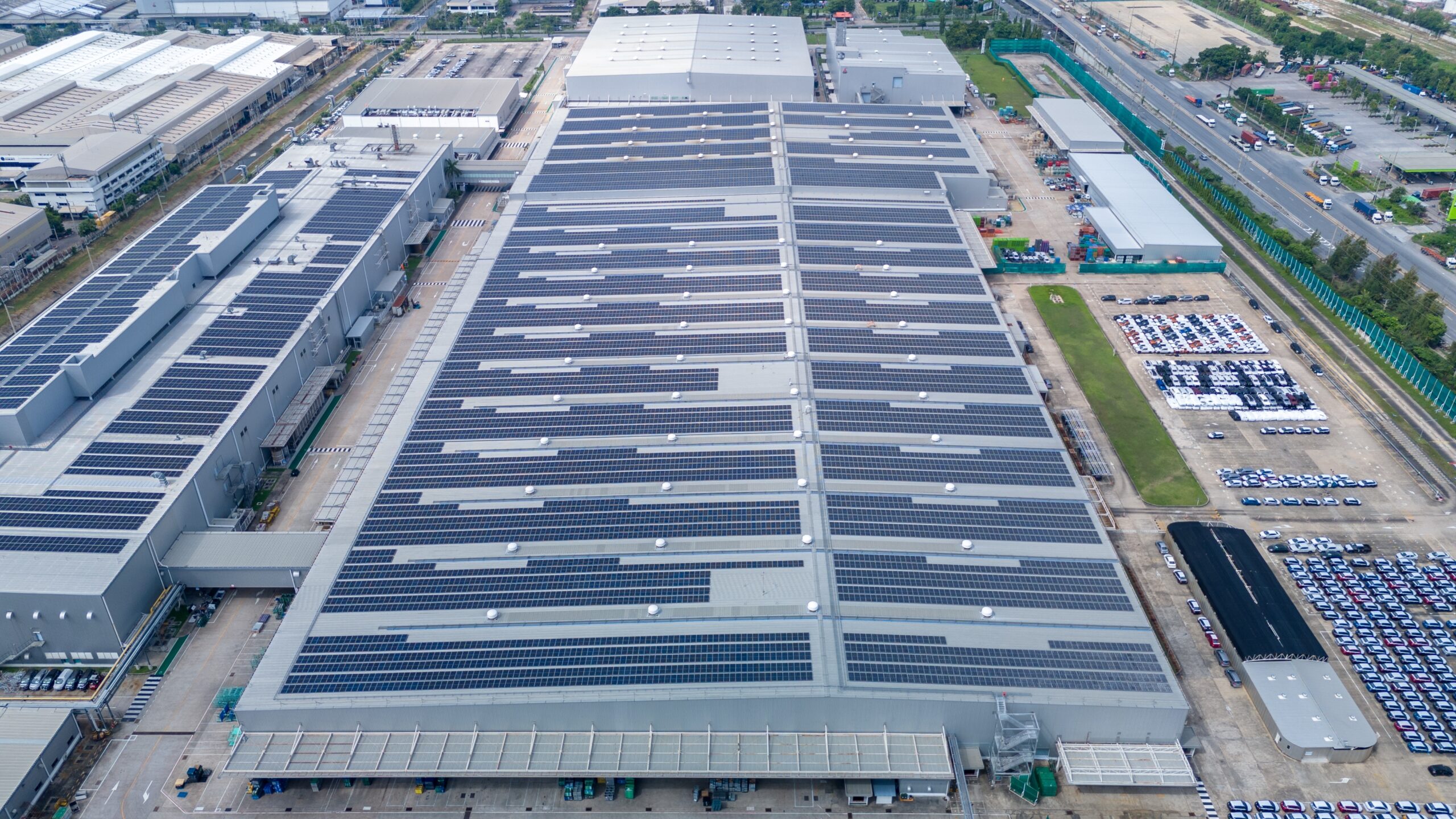
A good example is a recent project carried out for a company based in Udine. The project involved two complementary energy-efficiency measures: a complete LED relamping programme replacing the existing fluorescent lighting system and the installation of a solar PV system with a capacity of approximately 200 kWp.
This was a particularly unusual case because, in most industrial facilities, lighting typically accounts for between 5% and 10% of total energy consumption. Here, however, lighting represented more than 40% of overall electricity consumption due to the extensive floor area required for the company’s operations and the predominance of assembly activities.
For this reason, on a total electricity demand of 1 MW, the relamping project alone delivered a 25% reduction in overall energy consumption.
It is therefore easy to see how sizing the solar PV system without taking into account the energy savings generated by the relamping project would have resulted in an oversized installation.
Combining a relamping project with renewable energy investments also creates practical synergies during installation. The same workforce can be deployed across both activities and, in the event of poor weather conditions affecting photovoltaic installation work, can continue with the relamping activities, minimising downtime.
There is no single rule when it comes to relamping projects. The level of energy savings that can be achieved, the possibility of reducing the number of luminaires and the improvement in lighting quality all depend on the characteristics of the existing installation, which vary from one site to another.
For example, in a recent relamping project carried out at MEP’s facilities, the original lighting designer had installed waterproof luminaires at a mounting height where high-power metal halide floodlights would normally have been used. In practice, this meant installing a larger number of lower-power luminaires.
In this type of scenario, a relamping project can make it possible to halve the number of installed luminaires while achieving energy savings of more than 70%.
In other situations, where the original design was more closely aligned with the best practices of the time, it is more likely that the number of luminaires will remain unchanged, while energy consumption can still be reduced by around 60%.
Our experience shows that the quality of LED lighting can be appreciated in three main areas:
- Consistent performance over time, with extremely slow lumen depreciation, allowing illuminance levels to remain well above minimum regulatory requirements for at least twenty years.
- The ability to select LED solutions with colour rendering characteristics suited to a wide range of applications, offering significantly better performance than traditional fluorescent lighting.
- Easy integration with intelligent dimming and lighting control systems.
It is important to emphasise that before considering renewable energy generation, companies should first focus on reducing energy waste.
From this perspective, I can confidently say that there is no other intervention in the industrial sector capable of delivering payback periods as short as those achieved by replacing conventional lighting systems with LED technology.
At the same time, it is worth noting that, with the exception of logistics facilities and warehouses, lighting typically accounts for only 5% to 10% of a company’s total energy consumption.
One of the main trends among companies operating in the energy-efficiency sector is the growing need to interconnect and manage lighting systems, both normal and emergency lighting, heating and cooling systems, and environmental controls within a single integrated framework capable of responding to changing operational requirements.
In other words, the intelligent and integrated management of lighting systems, heating and cooling systems, and other environmental parameters not only helps improve employee comfort and working conditions, but also offers companies the opportunity to achieve further energy savings.
My advice would be to start with a comprehensive energy assessment in order to understand how energy consumption is distributed across the business, taking into account all energy carriers and utilities involved, including electricity, gas, water and other resources.
The next step is to identify a list of potential improvement measures, assigning an estimated payback period to each one and using this information to develop a multi-year implementation plan.
The plan should then be monitored and reviewed regularly, taking into account any national or regional incentives, whether in the form of grants or financing schemes, which may affect payback periods and influence investment priorities.
More generally, where suitable roof space or adjacent land is available, I would strongly recommend investing in renewable energy without delay. The sustained increase in electricity prices over recent years has made these solutions increasingly attractive.
Even where preliminary work on roofing structures is required, companies can consider involving an ESCo (Energy Service Company) in the investment. Structured over a period of 15 to 20 years, this approach can still provide energy costs that remain lower than those associated with purchasing electricity from the grid.
Americo Gregoris, Business Developer at GDS Lighting